

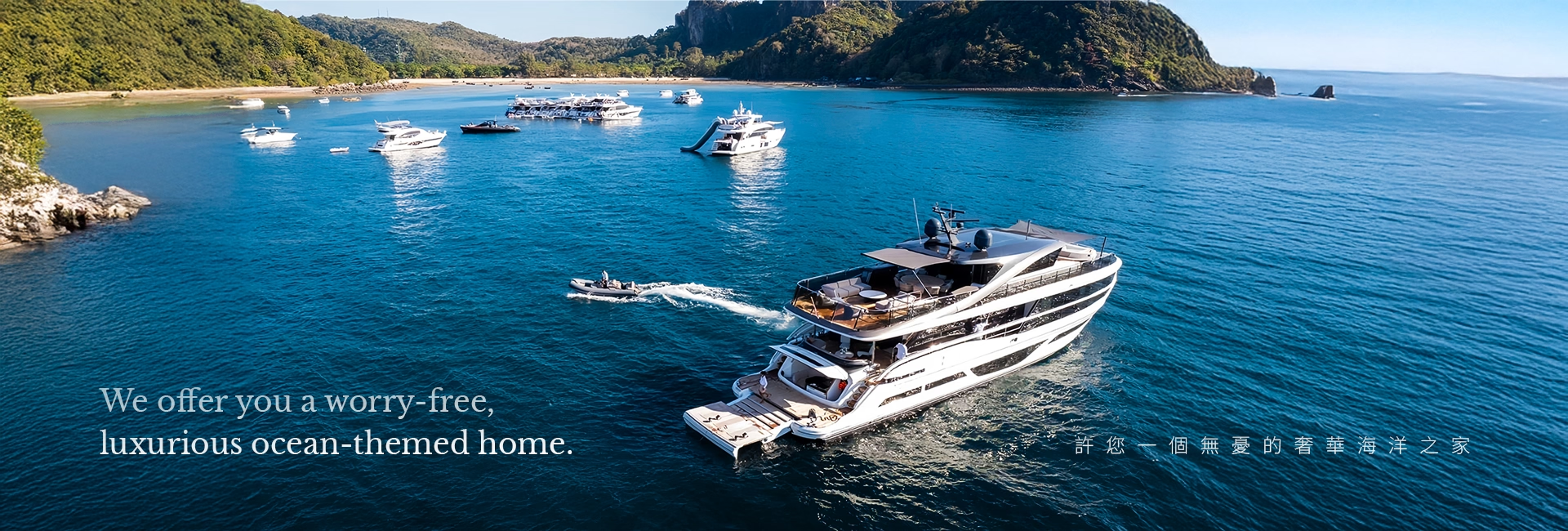
In our previous episode, we saw how a Princess S80 transforms from a simple mold, layers of fiberglass, and sheets of foam into a hull as solid as a battleship yet as quiet as a luxury SUV. But that hull was just the skeleton. In this episode, we reach the true turning point: how it gains space, materials, and all the reasons you would want to call this vessel home for a long time.
Cabins, furniture, ceilings, and storage units are not mere decorations; they are the "second skeleton" of yacht craftsmanship and the next key factor driving the ship's value. You might think it's just some woodwork, leather, and lighting—but you'd be underestimating the craftsmanship, processes, and systemic integration hidden beneath the surface.
In this video, we follow Aquaholic host Nick Burnham deep into Princess Yachts’ woodshop and cabin assembly plant to see how the salons, galleys, cabins, and bathrooms are born. These aren't mass-produced factory modules; they are a seamless blend of rigorous engineering and meticulous aesthetic craftsmanship.

Step into the Princess woodshop, and you won't see the sawdust and basic joints of a traditional carpentry shop. Instead, you'll witness a precisely calculated "cabin manufacturing process." Every piece of furniture and every wall panel is pre-built, trial-assembled, and packaged in the factory before being installed in the yacht. This ensures every angle and every panel perfectly aligns with the ship's architecture before it ever touches the hull.
🧠 Things you might not have realized:
- Every S80 master cabin is a complete module, with 1:1 dummy cabin frames used for technician pre-assembly inspections.
- In terms of materials, Princess uses various veneers including ASH Oak, Rovere Oak, Silver Oak, and Walnut Oak, adjusted for shade and gloss according to client preferences. Each veneer is hand-selected and grain-matched for visual continuity across the ship.
- A master salon coffee table (with storage lift mechanism) takes 30–40 hours from material selection to final packaging, while the master cabin's L-shaped wardrobe unit requires over 80 hours.
So when you step onto a Princess yacht and feel that the space is "perfectly complete," it's not just design—it's because the entire furniture structure was built from the ground up according to spatial logic.
Many think yacht furniture is just high-quality wood and leather upholstery. At the Princess factory, it is a "complete cabin craftsmanship system." Every element, from salon wall panels and ceilings to cabin lockers, lighting strips, and switches, adheres to three principles:
- Modularity: Designed for pre-assembly, installation, and future replacement.
- Integrated Design: Air conditioning vents, electrical wiring, and acoustic insulation are built into the panels from the start.
- Reproducibility: If a panel is damaged years later, the factory can replicate the exact component using the original material codes.
This system isn't just for aesthetics; it's designed so that the yacht remains functional, repairable, and traceable for over a decade. A single decorative panel may feature:
- Three-layer structure (Wood core + Soundproofing + Decorative layer)
- Four functions (Structural covering, Acoustic/Airflow management, Wire channeling, Lighting integration)
- A comprehensive assembly manual for seamless handover between technicians.
The true value isn't just in the type of wood; it's in a furniture system that is "memorable"—capable of being reproduced, replaced, and maintained while looking exquisite.
What catches the eye in Princess Yachts isn't just the table; it's the extensive use of "curved wall surfaces" and "non-sharp corner designs." From master bed headboards and bathroom mirrors to salon window frames and table edges, every detail is precisely bent, hand-edged, and seamlessly upholstered.
🧠 Especially the ceiling structure:
- Every ceiling module hides lighting, airflow, audio, and wiring, with curves matched precisely to the ship's tolerances.
- These modules are pre-assembled on a simulator platform to ensure angles are perfect before installation.
- High-end marine-grade synthetic leather is used for its elasticity and humidity resistance. The hand-gluing process is meticulous—any air bubble means starting over.
There are no "standard parts" here; every ship requires individual panel matching and tailoring. This is why the ceiling system alone requires hundreds of man-hours to complete.
The galley and bathroom countertops of the Princess S80 appear understated, but they are far from inexpensive. The factory doesn't use natural stone (too heavy) but rather high-density resin composite or ceramic composite boards sourced from European suppliers, offering scratch resistance, heat tolerance, waterproofing, and stability, with a silky matte finish.
🧠 Each countertop undergoes:
- CNC precision cutting → Edge finishing → Sink integration → Edge sealing → Hand-buffing and polishing.
- Thickness controlled within 20–25mm for lightweight performance.
- Reinforced support structures underneath to prevent cracking from long-term vibration.
A single L-shaped galley countertop takes 12–16 hours, but when integrated with cabinetry, drawers, and sockets, the entire galley system can take 80–100 hours to craft.
Nick put it best in the video:
This is the core. A luxury brand isn't defined by one stunning ship, but by the ability to maintain consistent quality across the entire fleet. Princess’s approach isn't just to make the wood look nice, but to build a "furniture system" that is reproducible, consistent, and maintainable.
What you are buying is not just a luxury yacht, but a highly engineered, precisely documented "high-end interior architectural module system," where every part, dimension, material, and hardware has its own record, spare parts, and coding. This means:
- The master cabin wall panel on the 7th S80 has an exact match on the 24th vessel.
- If you need repairs, upgrades, or even second-hand retrofitting, you can always trace back to the original design.
- This level of consistency is the most difficult quality control in the shipbuilding industry—and the most expensive.
Princess isn't just doing woodwork; they are creating the "memory system" of the entire vessel, ensuring that even a decade later, the ship "remembers" how it was built. That is the "invisible value" built into the price, and arguably the most precious part.
The reason Princess Yachts look so clean, consistent, and comfortable isn't just good design—it’s the fundamental difference in the factory's attitude toward craftsmanship.
They aren't just "decorating"; they are creating a systematic space that can be lived in, maintained, and enjoyed for decades while retaining its quality.
Every wall, table, and edge you see is craftsmanship forged by time and investment. You are paying for so much more than just a beautiful exterior.
📌 In the next episode, we will officially enter the realms of electrical systems and soft furnishings: from distribution boards and air conditioning lines to sofas and curtains—let's see how this boat transforms from a "beautiful space with furniture" into a "luxury residence that can sail across the ocean."