

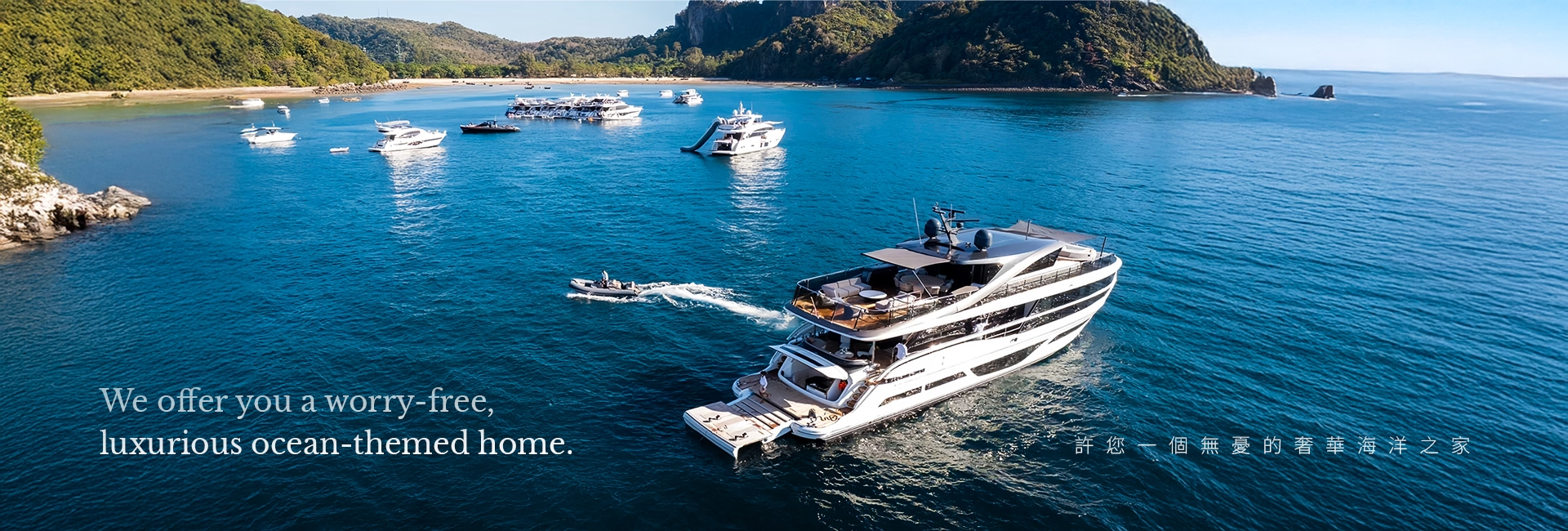
When it comes to understanding yachts, we generally keep our boats at the marina. Although mooring in the harbor area incurs an additional fee, it indeed provides the best balance between reducing transit costs and water accessibility. Boat owners can choose to moor at the nearest port to their favorite outlying islands, ensuring the vessel is protected in a safe environment, where they can resupply upon reaching the harbor, start the engine, and head out to sea.

But as the Great Bard wrote, "Ay, there's the rub... where are we going? What do we bring? How long will we be out there?"
This article explores the essential details and preparation checklists for daytime yacht cruising...
Always remember, two boats are always better than one; cruising together is always better, safer, and much more fun.
The Utilization Rate of Modern Yachts
We are surprised by how little most yachts and boats are actually used. Most of us have to work hard for a long time to afford our boats, and then have almost no time to use them! In reality, most vessels are simply not used as often as they should be because they are not properly scheduled.
In fact, social trends may be changing the way we use our boats. Due to pandemic restrictions, it appears that many boat owners are now engaged in more daytime yacht cruising adventures.
Furthermore, the restrictions on traveling abroad during the pandemic have undoubtedly made more families look favorably upon owning a boat. When we think of day cruising yachts, size really doesn't matter. Indeed, nowadays, it is very common to use a larger yacht exclusively as a dedicated day boat for short excursions.
About Self-Driving Yachting Excursions
Taking a boat out to the outlying islands is a major step forward. Tides, buoys, and dry harbors must all be taken into consideration. We need to fully understand how to set up the boat for a day trip, what items to bring onboard, and what to leave behind. Be fully prepared to handle everything required for daytime cruising around offshore waters and various outlying islands.
Haven't taken the yacht license exam yet? Check out this article: Powerboat Piloting Training Course - Read This Guide (Yacht Licensing)
Yacht Operators Must Understand Local Waters
This is a crucial element, but it gets us used to maneuvering the vessel at sea under manageable conditions without significant tidal issues. As our knowledge of local waters and our experience increase, we quickly step it up a notch, allowing us to carefully enter small, dry outlying island harbors during high tide. This can be accomplished by asking locals about the approach routes and carefully following the buoyed channels.
Also, be careful not to get caught or swept away by the wind or tide, but that is all part of the learning experience. It is also highly exciting, and of course, once you get used to this kind of coastal buoyage and piloting, it is more or less the same across most outlying island regions. Bit by bit, you can begin to undertake more demanding day trips to outlying islands and get into the swing of dealing with tides, buoys, and currents.
We also learned what extra items we truly need to carry for outlying island and coastal cruising.
Setup Direction for Daytime Yacht Island-Hopping Cruising
A well-chosen full-cruising vessel makes an excellent day boat. In addition to ensuring the safety and comfort of the crew, a streamlined day-cruiser setup is always incredibly fun. We will provide you with your own checklist later, but frankly, after bringing essential resources onboard such as life jackets, a handheld VHF, water, snacks, a knife, a cooler, spare clothes, and sunscreen, you can begin picking other advanced options.
The joy of boat ownership lies in the fact that it means we already have our lines and anchors organized, our basic safety gear loaded, and the safety and navigation aids required for proper cruising in place. You should take true pride in keeping your yacht in a constant cruise-ready state.
For a complete list of how we prepare for a cruise and the items we carry with us, please check out the Daytime Yacht Cruising Essentials below.
Key Points to Consider for Self-Driving at Sea
All cruising—whether a single day trip or a long-distance overnight journey—requires a well-maintained boat, free from annoying issues such as bad batteries, unstable starting, or engine stalling. Before setting off, we also check all standard fluid levels on the engine and outboards.
Using paper charts for navigation, a chartplotter, or a smartphone app, write down a simple list-style passage plan. We prefer to run our voyage plan from our paper charts onto our chartplotter in advance.
Next, before leaving and when planning our return, we inform our marina of our intended sailing itinerary. Loading and securing everything always requires careful consideration before casting off from the berth.
The Importance of Cruising Together
Always remember, two boats are always better than one; cruising together is always better, safer, and more fun. As for the weather forecast, we study how it will affect our route and our vessel.
Another rule is: never completely trust the weather forecast! Maintain a healthy skepticism and formulate your plans accordingly. We listen to the Coast Guard's scheduled daily weather forecast updates on the VHF and continue to monitor it throughout our daytime cruise. Generally speaking, weather forecasts for coastal sailing are more prone to errors than those for offshore cruising.
Remember: the safety of the personnel onboard always comes first. If conditions continue to deteriorate, never feel bad about turning back early. Ensure you know the exact daytime yacht cruising distance and make sure your fuel tank is full so that you can easily operate the vessel with a safe margin of reserve fuel.
Always Plan for Alternative Ports in Advance
If you feel that changing weather conditions might prevent you from returning home, plan alternative mooring locations as backup ports. If the entrance to your planned marina dries out depending on the tide times, planning alternative ports becomes exceptionally important. Coastal daytime yacht cruising means heading out to sea early and returning within the same tide cycle.
If you plan a double-tide strategy (i.e., staying past the next low water), your knowledge of the weather and charts must keep pace with the currents. Please note that when you arrive at your target beach or bay, safe anchoring requires the correct technique.
Deploying the Anchor and Weighing Anchor
You will need to know how to deploy your anchor, perhaps backing the boat up and reversing a bit to set it, and then keeping track of the exact direction to know how to retrieve it. In severe weather, when we know for certain that we cannot safely retrieve our anchor, we will attach a buoy to the end of the rode to float it and release our anchor line. We only go back to retrieve it when the weather improves.
Yacht Voyage Planning Must Consider Sunset Times
Another point to note is the sunset time for any early-season or late-season daytime cruise. Ensure you leave enough daylight for your planned evening/sunset cruise. This has caught us out more than once, especially at the end of summer. There might be enough water to get back, but not enough daylight for us to easily navigate back to the marina.
Another phenomenon to consider is heavy fog. Set a safe route home on your chartplotter—this will at least help in such challenging circumstances. A calm mind, sharp ears, and a real route home will save the day.
Yacht Outings Must Account for Sea-Sick Passengers
Seasickness is another reality of yachting life. We all react differently to the motion of the boat. Avoiding slamming and high-G turns might help some passengers who are prone to seasickness. Taking medication before the trip helps certain individuals, but if a crew member is truly so sick that they are about to collapse, please be prepared to return immediately. It is helpful for those prone to seasickness to stay on deck to breathe fresh air. Recently, some have also suggested that Coca-Cola might be a remedy for easing seasickness, which is always worth a try.
Avoid Sunburn During Self-Driving Sea Trips
In your rush to get out on the water, another thing that can easily be overlooked is the stealthy onset of sunburn. It is easy to forget that even on windy, cool, and bright days at sea, the sun can still cause damage, dehydrating your skin and body. Rehydration drinks, hats, sunscreen, lip balm, and humble bottled water all have their place.
Daytime Yacht Cruising Essentials & Preparation Checklist
Category 1: Basic Requirements (Standard Safety Equipment):
- Full tank of fuel
- Life jacket per person
- Fire extinguisher / lashing lines and bucket
- List-style voyage plan
- Weather forecast from the marina
- Sunset time considerations
- Charts and compass
- Handheld VHF radio
- Phone and charging cable
- Snacks and bottled water
- Spare jacket
- Sun hat, sunglasses, and sunscreen
- Handheld smoke and red flares
- First aid kit
- Pocket knife
- Tow line
- Mooring buoy boat hook
- Basic tools and flashlights
- Lifebuoy / rescue lines for man overboard situations
In addition: Inform the marina of your sailing plan and estimated return time
Silver:
You can also refer to this article: Do You Know All About Yacht Ocean Safety Equipment Knowledge? (Yacht Maritime Safety)
Category 2: Onboard Optional Gear (Can be added on top of Category 1 requirements):
- Pre-entered routes in your chartplotter
- Portable Bluetooth speaker
- Cooler box and ice
- Camera
- Binoculars
- Surfboards, water toys, and tow ropes
- Fishing gear
- Snorkeling equipment
- Household goods, cards, games, books
- Towels
- Change of clothes
Category 3: Additional Equipment (Add as capacity and space permit):
- A refrigerator filled with drinks and ingredients (built-in onboard or portable refrigerator)
- A playlist on a Bluetooth phone to provide a wonderful atmosphere while moored
- A spare tender to go ashore for lunch or dinner at a pub/bar
- Pre-prepared dinner onboard and chilled drinks
- Deck shower system
- Marine toilet and holding tank